








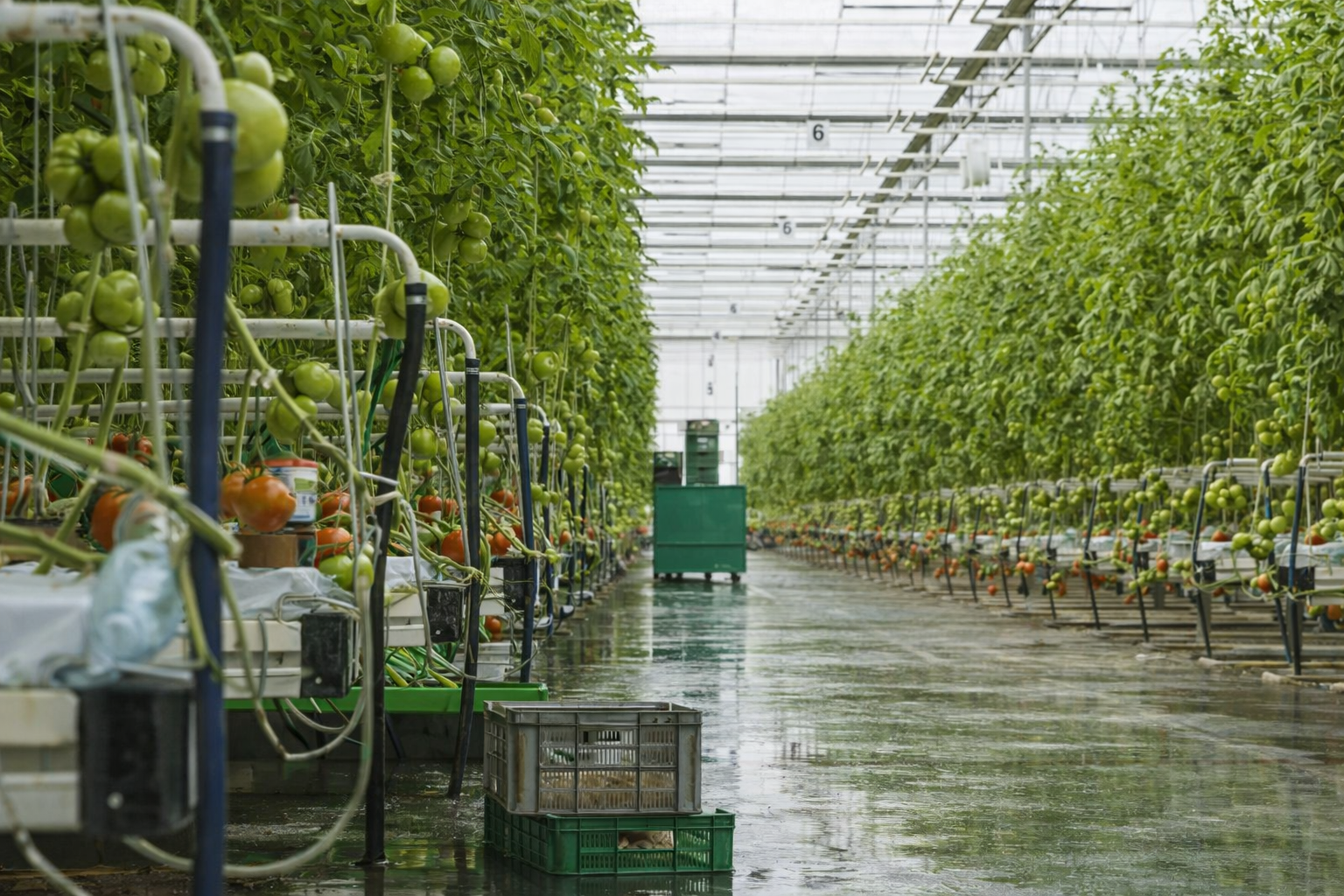
Company Overview
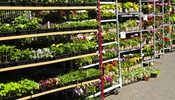
A regional greenhouse operator runs multiple facilities with rolling plant racks and irrigation carts in continuous circulation. Daily operations include scheduled watering cycles, misting systems, hose-down sanitation, and routine transport between indoor and outdoor growing zones.
In this environment, carts rarely experience extended dry periods. Moisture exposure is constant, not incidental.
Business Challenge
Over time, primary transport carts became progressively harder to move. Wheels initially rolled normally but began showing visible material breakdown and dimensional instability after extended exposure to water.
“We can’t afford carts going down in peak season because the wheels won’t roll.”
Mobility reliability declined during high-demand cycles, forcing maintenance teams to rotate carts out of service for repeated caster replacement.
The issue was not load failure.
It was environmental mismatch.
Existing Caster Configuration (Before)
Rig:
5x2"
Kingpin & rigid combo
Zinc-plated steel
Wheel:
Phenolic resin
Flat
Roller
Observed Result:
Wheels progressively degraded in constant wet exposure, increasing rolling resistance and requiring premature replacement.
What Was Really Happening
The greenhouse environment created a performance condition dominated by persistent moisture. Wet-environment evaluation priorities emphasize:
- Tread resistance to water absorption and swelling
- Hardness retention under prolonged exposure
- Corrosion resistance of metallic components
- Dimensional stability during repeated wet cycles
Phenolic resin, while rigid and structurally capable under dry load conditions, does not align with continuous moisture exposure priorities.
As water exposure accumulated:
1. Dimensional Stability Declined
The wheel material began losing hardness retention characteristics under repeated wet cycles. Even minor dimensional change altered rolling geometry and contact behavior.
2. Rolling Resistance Increased
As the wheel’s structure shifted, resistance increased. Operators compensated with additional push force, accelerating wear and fatigue.
3. System Interaction Degraded
Roller bearings depend on stable wheel geometry. As the wheel body destabilized, bearing alignment and rolling efficiency were indirectly affected, compounding resistance.
The failure was not isolated to one component.
It was a system reacting to an environment it was not designed to tolerate continuously.
Recommended Solution
A revised configuration was selected using wet-environment weighting priorities as the primary decision driver, rather than rigidity or load rating alone.
Material selection focused on moisture resistance, dimensional stability, and long-term performance in repeated water exposure.
Updated Caster Configuration
Rig:
5x2"
Kingpin & rigid combo
Zinc-plated steel
Wheel:
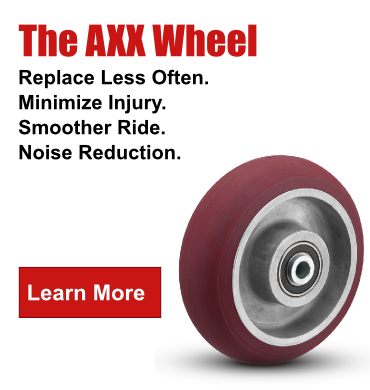
TPE on polypropylene
Flat
Pedestal ball
Why This Solution Worked
Moisture-Resistant Tread Material
TPE provides improved resistance to water interaction compared to rigid phenolic construction. The elastomeric tread maintains dimensional stability and hardness retention during prolonged moisture exposure, reducing swelling-related performance drift.
Stable Hub Core Construction
The polypropylene core offers improved moisture tolerance and structural consistency in wet conditions. By reducing water-related material instability, the wheel maintains consistent geometry over time.
Bearing Compatibility with Stable Wheel Structure
The pedestal ball bearing supports sustained movement while benefiting from improved dimensional consistency in the wheel body. With the tread maintaining stability, bearing alignment and rolling efficiency remain predictable.
Maintained Load Capacity Without Moisture Trade-Off
The updated configuration preserved required load performance while aligning material properties with environmental priorities, eliminating the mismatch that caused degradation.
Results
- Reduced wheel degradation in constant wet exposure
- More consistent rolling resistance during peak demand cycles
- Decreased cart downtime for caster replacement
- Improved mobility reliability across watering zones
“Now the carts roll the same in week twenty as they did on day one.”
Key Takeaway
In greenhouse watering zones, moisture compatibility is not a secondary refinement—it is the dominant design variable. When tread material lacks water-resistance and hardness retention, dimensional drift disrupts the entire mobility system.
Caster performance in wet environments depends on alignment between tread material, hub stability, and bearing interaction. Selecting components based on load capacity alone overlooks the environmental forces that ultimately determine longevity.
How CasterDepot Can Help
For over 45 years, CasterDepot has helped nursery & greenhouse operations engineer mobility solutions that perform under real-world conditions—not just on spec sheets.
Next steps:
Talk it through with your local CasterHead®
Discuss pricing and lead time
Request supporting documentation
Test a sample in your application
Contact us now at https://www.casterdepot.com/contact/ or call one of our CasterHead® at 888.907.9952