










Company Overview
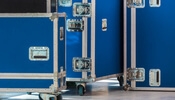
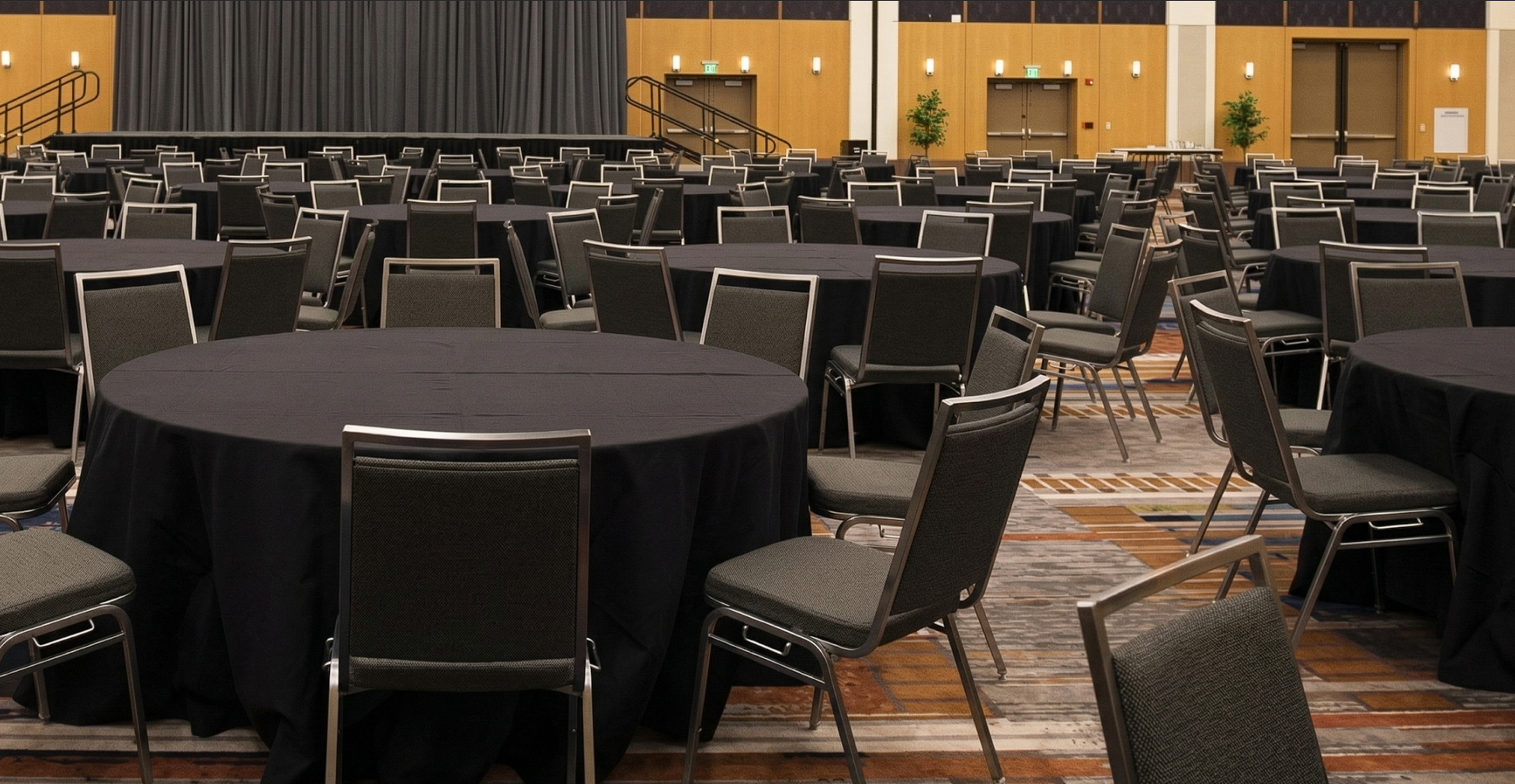
A large resort and conference hotel hosts weddings, corporate meetings, and formal banquets throughout the week. Event staff frequently move mobile equipment such as service carts, portable bars, and staging equipment between ballrooms and conference areas.
Many events take place while guests are present, requiring staff to reposition equipment quietly during presentations, ceremonies, and meal service.
Business Challenge
During events, staff occasionally need to move carts across polished ballroom floors and adjacent tile corridors to reposition service stations or clear equipment. Over time, several carts began producing noticeable rolling noise during movement.
"During a wedding ceremony, you could hear the cart moving across the ballroom. That’s the last thing we want guests noticing."
Event coordinators reported that the sound became especially noticeable during quiet moments such as speeches, presentations, or wedding ceremonies. As a result, staff often delayed moving equipment until breaks in the event schedule, which slowed workflow and disrupted room turnover between events.
The carts themselves were structurally sound. The issue appeared only when they were moving.
Existing Caster Configuration (Before)
Rig:
5x2"
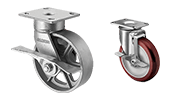
Kingpin & rigid combo
Zinc-plated steel
Wheel:
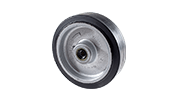
Phenolic resin
Flat
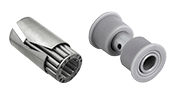
Roller
Observed Result:
Noticeable rolling noise generated during movement across hard flooring, particularly in quiet indoor environments—leading to operational disruption, delayed equipment movement, and reduced efficiency in event turnover.
What Was Really Happening
A closer look at the mobility system showed that the carts were operating with a configuration optimized for durability rather than acoustic performance.
Rigid Wheel Material Amplified Floor Noise
Phenolic resin wheels are extremely rigid and transmit impact energy rather than absorbing it. As the carts rolled across polished ballroom floors, small surface variations created repeated contact impacts that generated audible rolling noise.
In quiet hospitality environments, this type of rigid wheel-floor interaction becomes especially noticeable.
Vibration Was Transmitted Through the Caster System
Because the wheel material provided minimal vibration dampening, energy generated at the floor interface traveled directly through the wheel and into the caster assembly.
Once inside the frame, those vibrations propagated through the cart structure, allowing the sound to resonate through the equipment itself.
Bearings Allowed Vibration to Pass Through the Assembly
Roller bearings supported efficient rolling under moderate loads, but they did not contribute to vibration reduction within the wheel assembly.
With no component in the system designed to dissipate vibrational energy, noise generated at the floor interface was transmitted almost entirely through the caster system.
The configuration functioned mechanically, but acoustically it behaved like a rigid vibration path from floor to cart.
Recommended Solution
After reviewing how the equipment was used—including floor materials, operating loads, and the need for quiet movement during live events—the caster system was reconfigured to prioritize vibration dampening and quieter rolling behavior while maintaining reliable maneuverability.
Updated Caster Configuration
Rig:
6x2"
Kingpinless & rigid combo
Zinc-plated steel
Wheel:
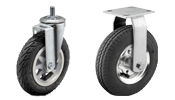
Semi-pneumatic
Round
Pedestal ball
Why This Solution Worked
Softer Wheel Interface Reduced Rolling Noise
The semi-pneumatic wheel introduced a compliant rolling interface that absorbed small surface variations rather than transmitting them directly into the caster system.
Instead of producing sharp contact impacts, the wheel deformed slightly as it rolled, which significantly reduced audible floor noise on polished ballroom surfaces.
Wheel Construction Provided Natural Vibration Dampening
Compared to rigid phenolic wheels, the semi-pneumatic construction naturally dissipated vibrational energy before it could travel into the frame of the cart.
This reduced the amount of vibration transmitted through the caster system and prevented the cart structure from amplifying rolling noise.
Bearing Selection Maintained Smooth Rolling
Pedestal ball bearings supported consistent rotation under moderate loads while maintaining predictable rolling resistance.
Because the wheel material now absorbed most floor-generated vibration, the bearing system operated within a quieter and more stable mobility system.
Improved Rig Stability for Event Operations
The kingpinless & rigid combo configuration provided stronger structural support for frequent maneuvering in tight event spaces while maintaining directional stability during longer pushes across ballrooms and corridors.
Results
- Noticeable reduction in rolling noise during live events
- Equipment can be repositioned without disrupting presentations or ceremonies
- Staff no longer need to delay equipment movement during quiet event moments
- Improved operational flow during event setup and room turnover
"We can move equipment during the event now without worrying about guests hearing it across the room."
Key Takeaway
Caster performance in quiet hospitality environments is strongly influenced by how the wheel material interacts with hard flooring surfaces. When rigid wheels are used on polished floors, even small surface variations can generate noticeable noise that travels through the entire mobility system.
By selecting a wheel that naturally absorbs vibration while maintaining compatible rig and bearing support, mobility systems can operate smoothly and quietly without sacrificing durability or maneuverability.
How CasterDepot Can Help
For over 45 years, CasterDepot has helped hospitality operations engineer mobility solutions that perform under real-world conditions—not just on spec sheets.
Next steps:
Talk it through with your local CasterHead®
Discuss pricing and lead time
Request supporting documentation
Test a sample in your application
Contact us now at https://www.casterdepot.com/contact/ or call one of our CasterHead® at 888.907.9952