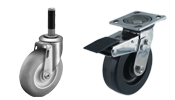
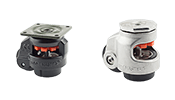
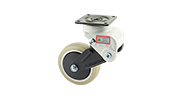
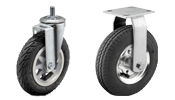
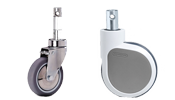
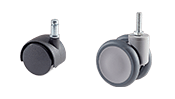
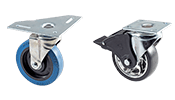
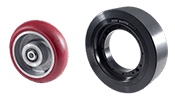












While all casters are definitely not the same, most are an assembly of common parts, or components. The variations (or specializations) of the components are what affect performance, capabilities and attributes. Let’s take a ten thousand foot view of the most common caster components.

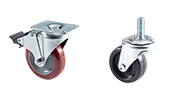
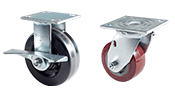
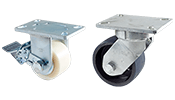
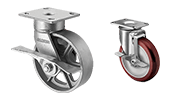
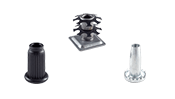
Rigs attach to a cart or equipment using a specific mounting option. Mounting options are most commonly a top plate or a type of stem. Rigs also hold the wheel, brake or other caster options in place. Rigs can be stationary (rigid) or can allow rotation (swivel). Some are designed to support ergonomic applications. Some rigs are designed to reduce maintenance. Some are designed to support heavy loads, etcetera. The possibilities are endless!

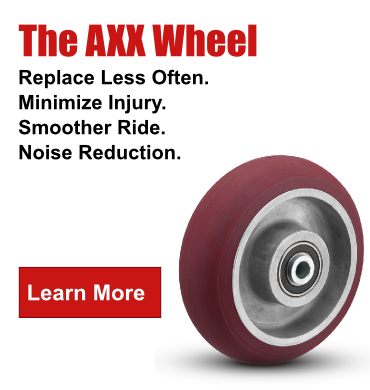
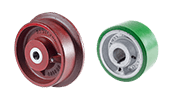
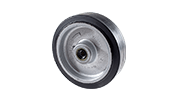
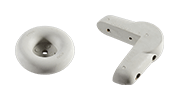
Wheels can be single-piece construction or can have a tread that is attached to a hub of a different material. The attributes and applicability of a wheel are largely dependent on its composition and shape. Some wheels are designed to protect floors. Some can tolerate extreme temperatures. Still others can be used in environments where there is chemical exposure. For just about every application, there is a wheel type that will work perfectly!

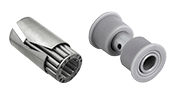
Bearings assist in the rollability of the wheel. The type of bearing that is chosen will impact the capabilities of the caster. Some bearings are appropriate for washdowns, while others work well in towline applications. Still others are designed to reduce noise and so on!

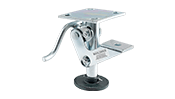
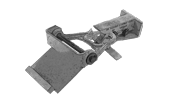
Brakes prevent a wheel from rolling and in some cases, also prevent the caster from rotating. Not all casters have brakes. Like other caster components, there are many styles and variations. The type of brake that should be used is highly dependent on the application.