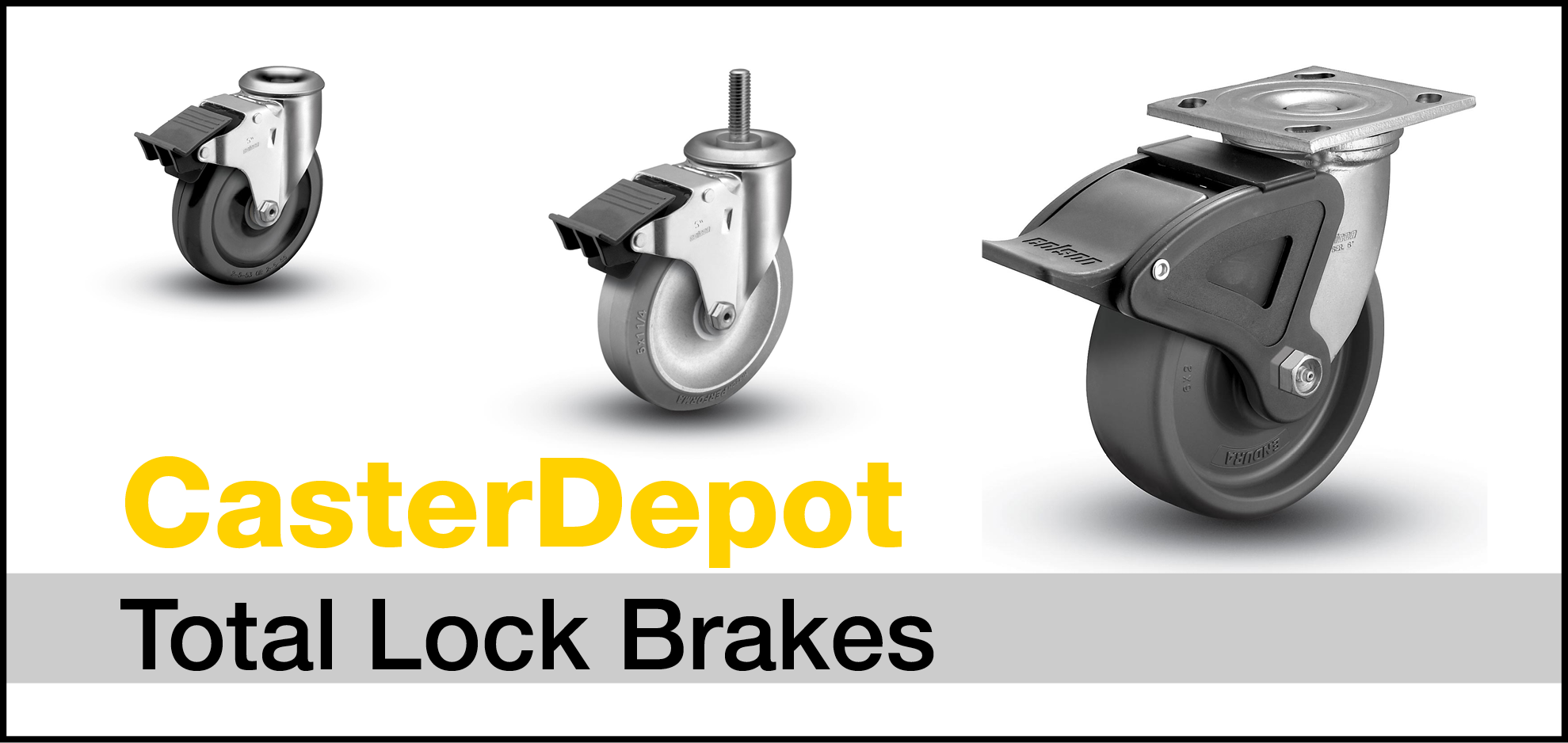











Today, we live in a work-oriented society where safety is still highly valued. Whether workers are delivering office supplies between floors of an upscale high-rise or transporting palettes of electronic components across a warehouse floor, many transport methods require casters with a brake or sort of locking system. With minimal effort, the correct caster brake ensures motion only occurs when desired. This alone can help reduce risk in the workplace and promote efficiency.
Total Lock Brake Dynamics
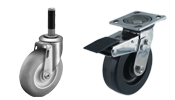
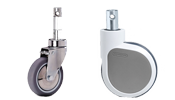
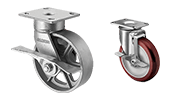
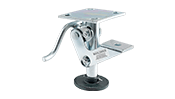
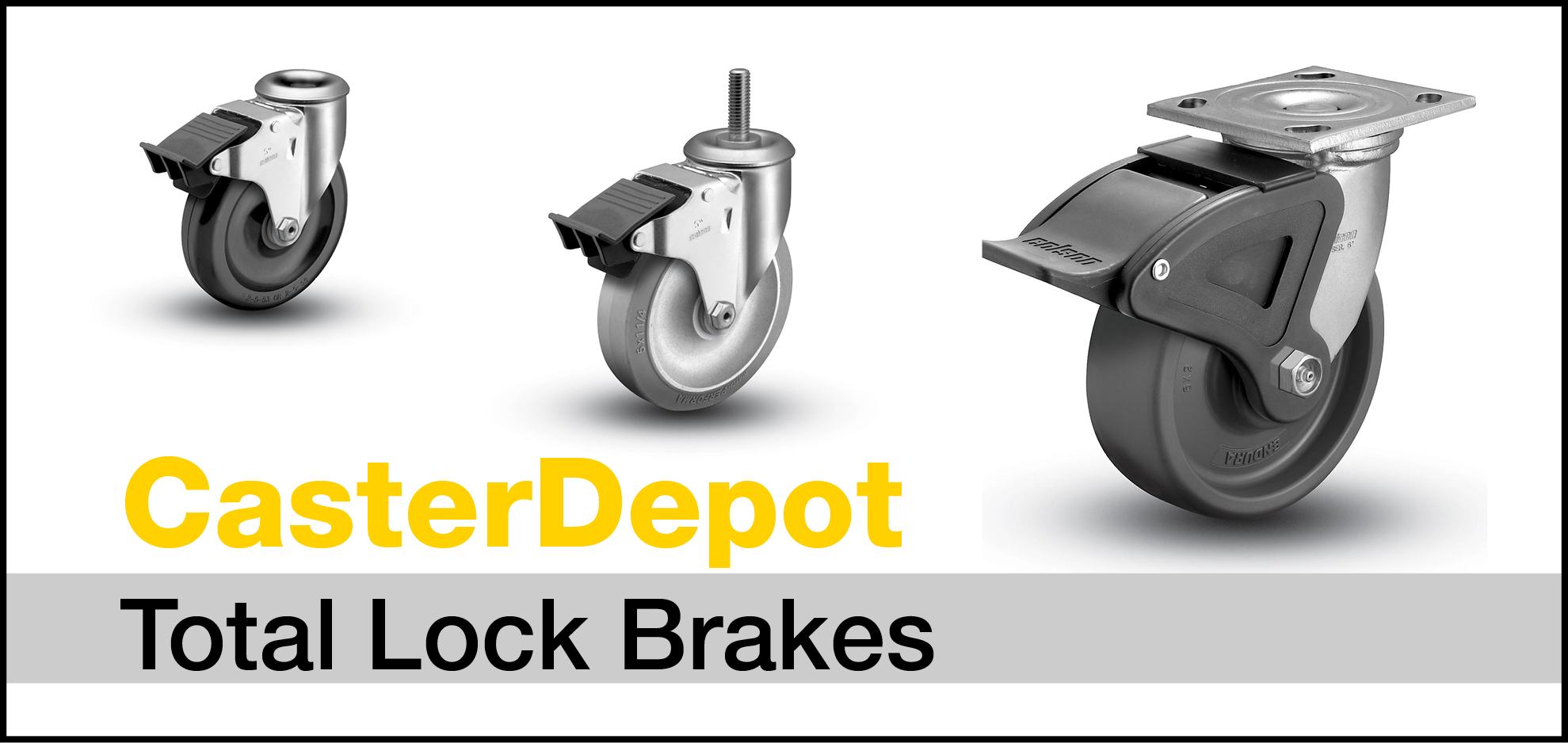
Total lock brakes are a common caster brake in most workplace environments, and the way they work is actually quite simple. By engaging the brake by applying pressure to the total lock brake's pedal, the caster's swivel section and wheel become locked in place. This completely eliminates the risk of movement because when a total lock brake is engaged, it prevents all rolling AND swiveling of the caster: a complete stop. The pedal used to engage and disengage the total lock brake is ergonomically designed for efficiency and requires little effort from the user. The brake pedal of a total lock brake is designed to be always accessible. Also, this caster brake requires no maintenance. The total lock brake is available on the highly popular Colson 4 Series casters and Colson 2 Series casters among others.
Other Brake Options
Sometime specific applications require specific braking systems. Lucky for you, CasterDepot has a long list of caster brake options. Below are some of our most popular caster brake options.
- Side cam brakes. A popular caster brake that uses a design where friction stops the wheel from rolling when engaged; this caster brake is field installable.
- Thumb screw brakes. This caster brake has a super simple design where the tightening of a screw by hand will prevent the wheel from rolling; this caster brake is only factory installed.
- Top lock brakes. This caster brake uses a foot pedal to create pressure on the wheel and prevent rolling, but it does NOT prevent swiveling like the total lock brake does; this caster brake is field installable.
Choosing a Caster Brake
While the prices of caster brakes do vary, you typically get what you pay for. The more expensive caster brakes are likely to be reliable, require minimal effort to use and are either low maintenance or maintenance-free. Cheaper caster brake options may be more difficult to engage, use cheap parts that may break or even be unable to force the wheel to a complete stop.
Here are CasterDepot, our most recommended caster brake has been the total lock brake for years, and its value lies in being able to bring a swivel caster to a complete stop. To do this with any other brake, a swivel lock would be needed. With its competitive pricing, rust and corrosion resistance and possible field installation, the total lock brake is also our most requested brake. However, that does not mean it is always the most practical.