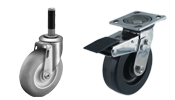
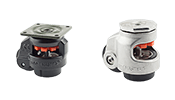
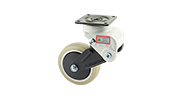
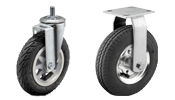


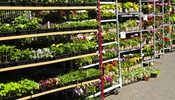










There are a number of options to consider when placing your next order of new or replacement grow cart casters. That’s why CasterDepot is here to help you make an informed and educated decision as simply as possible. First, let’s take a look a typical growing season.
Months before anything is planted, purchasing managers will place orders for new parts to get their fleet of carts back to full capacity. With an average of 3.4% of carts getting lost per season, an order can include anything from parts to casters to replacing entire carts. When it comes season’s start, every cart will need to be ready or else an opportunity for profit is missed.
During growing season, carts will take an onslaught of dirt, debris, water, heat, fertilizer, chemicals and everything in between while serving as storage and often not moving an inch. Finally shipping day arrives and a flurry of movement begins and casters will have to endure various means of pushing, pulling, towing and shipping over gravel, asphalt and mud. When the rubber literally meets the road, your carts casters will either be up to the test, or fail and hold up your shipping schedule -- losing precious days of shelf time for sensitive product.
Below are grow cart parts to consider before exposing it to your next season.
Shelving
Grow cart shelving and frames are typically made of one of two options; a more economical but lower quality, imported metal, or a more expensive but higher quality, domestic metal. Depending on your budget and expected level of use, either are effective choices. Rust is your primary enemy in this situation, which is why when making your purchase you should highly consider a stainless steel or zinc plated metal if your grow cart will be exposed to wet or humid environments. If properly cared for, shelving can last up to a decade or more.
Identification
More commonly before reaching a decade lifespan however, carts are often lost among the thousands of others at local retailers during the short and hectic transport season. At $400-$500 per cart, businesses are quickly recognizing the importance of identification to track their carts and product movement. Low cost solutions include machine stamping or colored wheels for visual identification, where a larger investment like GPS or RFID chips can electronically locate carts remotely.
Casters
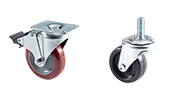
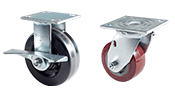
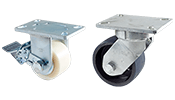
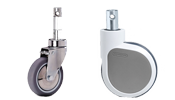
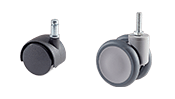
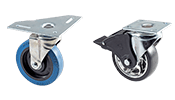
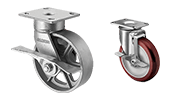
Often overlooked, greenhouse grow cart casters can make or break your entire cart. With just a 1-in-4 failure rate, your entire fleet of carts are sidelined and immobilized. Casters served as both the muscle and movement of your cart and can either make transportation a breeze, or a nightmare. Let's break down what options you need to consider.
Wheels
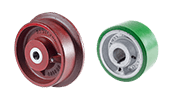
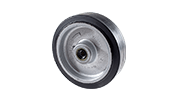
- Rubber on Iron wheels are a great option for display carts for an end-user solution where they will remain stationary for the majority of their life. But as they are an imported, low cost solution, they do mark easily and have a higher failure rate in abusive applications. We recommend weighing the initial cost effectiveness against the potential maintenance cost to determine if this is worth the upkeep.
- Trans-forma wheels from Colson have a thermoplastic rubber tread which make them a great option for low impact transportation. For a cost to value comparison, Trans-forma wheels are the best caster option as they both have the longevity and resilience to take most jobs while also being economically priced.
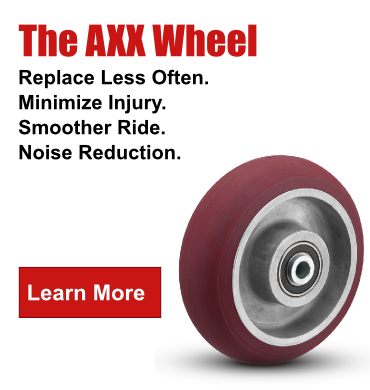
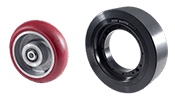
- Performa wheels from Colson have a thick, elastic, rubber tread that is tear-free and towable. This durable option provides an exceptionally smooth tow, low-bounce during shipments and repels dirt, metal, nails and debris from potential punctures. Performa is also the only wheel option to offer customizable colors. If you happen to have the budget to invest in Performa wheels, they are the most durable and responsive option on the market.

Bearings
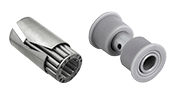
- Delrin bearings don’t have any moving parts as they are simply oil-injected nylon rings. This option is a great low-cost solution, but creates a lot of friction risking the potential for cracking. These bearings should never be used in towline applications.
- Roller bearings are cylinder-like metal pieces that spin for easy movement. This options provides the highest weight capacity, but trades some mobility for this perk. Roller bearing also induce side thrust during turns, which can cause internal breakdown from excessive outer pressure. They are also the most impact resistant but need regular grease and maintenance.
- Sealed ball bearings provides the most maneuverability, making it up to 30% easier for pushing and pulling grow carts. Ball bearings create the least side thrust making tight turns simple while keeping friction low. This maintenance-free wheel houses the ball bearings in an air-tight track that is pre-lubricated, requiring no additional attention. An added benefit of the sealed ball bearing is that they can’t be potentially jammed by debris, and are also heat treated which eliminates almost all side thrust friction.

Other Grow Cart Considerations
- Chatter - to reduce excess swiveling and noise during push/push/towing, wheels should have at least a 1” extended lead on the pivot point for optimal wheel tracking.
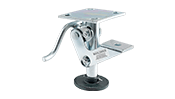
- Locking - during growing and shipping periods, a simple caster brake or floor lock can help reduce accidental movement.
- Swivel Seal - adds a cover to the casters swivel mechanism which helps keep out the majority of dirt and debris as well as moisture.
- Swivel Lock - gives the option to engage a pin which stops the wheel from swiveling creating a shopping cart-like push ability.
As you can see, there are quite a few considerations to take into account before making your next grow cart parts order. After reviewing the options above, remember that there is no best choice, only the choice that best fits your situation and budget. If you’d like some help making this decision a little easier, call CasterDepot today and let one of our experienced team members find the right solution for your upcoming season. We can’t wait to make it your best one yet.