










Company Overview
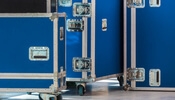
A regional hospitality company operates multiple upscale event venues that host weddings, corporate conferences, and private celebrations. Each facility maintains large inventories of mobile banquet equipment including chair carts, service stations, and portable staging that must be frequently moved between storage areas and ballroom spaces.
Event teams regularly reconfigure layouts several times per week, often moving heavy equipment carts across polished ballroom and lobby flooring.
Business Challenge
Over time, the facilities team began noticing visible floor damage along the primary routes used during event setup. Dark streaks, scuffing, and localized surface wear appeared along polished flooring sections that had recently been refinished.
“After every large setup, we could see the same streaks appearing again along the main routes. It became clear something in the equipment movement was causing it.”
Initially, the maintenance team believed debris or cleaning residue was responsible, but repeated cleaning cycles and floor polishing failed to eliminate the marks. The damage consistently reappeared shortly after large event setups when equipment carts were moved across the ballroom floor.
Management became increasingly concerned as the cost of floor maintenance rose and the appearance of the venue began to suffer between events.
Existing Caster Configuration (Before)
Rig:
5x2"
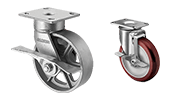
Kingpin & rigid combo
Zinc-plated steel
Wheel:
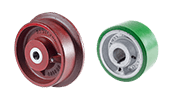
Cast iron
Flat
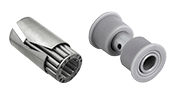
Roller
Observed Result:
Not specified in TSG.
What Was Really Happening
Although the carts remained structurally functional, the interaction between the wheel material and the finished ballroom flooring created a gradual but persistent damage pattern.
Aggressive Floor Contact from Hard Wheel Material
The cast iron wheel created a highly concentrated contact interface with the polished flooring. Hard metal wheels do not deform under load, which means the force of the cart is transmitted directly into the floor across a very small contact patch.
In a hospitality environment where carts repeatedly follow the same travel paths, this concentrated contact gradually produced visible streaking, scuffing, and surface wear along those routes.
Load Concentration from a Flat Wheel Face
The flat wheel face maintained consistent contact with the floor during straight movement, but it also concentrated load across the entire rigid contact surface. When carts were turned or repositioned, the rigid contact characteristics increased friction and shear forces against the finished flooring.
Over time, these forces amplified the cosmetic damage appearing along frequently used movement paths.
Bearings That Enabled Movement but Not Floor Protection
The roller bearing allowed the heavily loaded carts to roll under continuous use, reducing internal friction within the wheel assembly. However, bearing performance does not influence how the wheel material interacts with the floor.
As a result, while the bearing supported mobility, it did nothing to mitigate the aggressive floor contact produced by the metal wheel.
Recommended Solution
After reviewing the movement patterns of the banquet carts and the flooring conditions within the venues, the mobility system was revised to prioritize floor-friendly interaction while maintaining durability for frequent equipment movement.
The goal was to reduce aggressive floor contact without sacrificing maneuverability or load capacity for stacked chairs and staging equipment.
Updated Caster Configuration
Rig:
5x2"
Kingpin & rigid combo
Zinc-plated steel
Wheel:
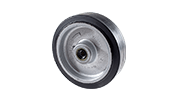
TPR on polypropylene
Flat
Pedestal ball
Why This Solution Worked
A Floor-Friendly Tread Interface
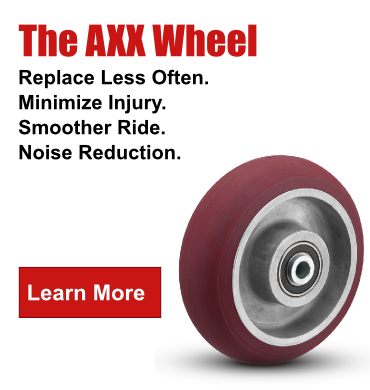
The thermoplastic rubber (TPR) tread introduced a softer rolling interface between the wheel and the polished flooring surface. Unlike rigid metal wheels, the elastomeric tread slightly deforms under load, distributing force across a broader contact area.
This reduced the concentrated pressure points that previously produced scuffing and visible floor wear.
Reduced Surface Shear During Turning
Because the tread material has inherent elasticity, it absorbs a portion of the shear forces generated when carts pivot or change direction. Instead of transferring these forces directly into the floor surface, the tread material dissipates part of that energy within the wheel itself.
This change significantly reduced the visible streaking that had been appearing along repeated travel paths.
Smoother Rolling Characteristics
The pedestal ball bearing provided more consistent rolling behavior under load compared to the previous configuration. With lower internal resistance, carts required less push force and moved more predictably when navigating between storage areas and ballroom floors.
This smoother motion further reduced abrupt floor interactions that can contribute to surface marking.
Results
- Visible reduction in floor streaking and scuffing along common equipment routes
- Decreased frequency of floor polishing and corrective maintenance
- Smoother movement of heavily loaded banquet carts
- Improved protection of recently refinished ballroom flooring
“We stopped seeing those dark travel paths appear after events, which made a noticeable difference in how the ballroom looked between setups.”
Key Takeaway
Caster performance in hospitality environments is closely tied to how the wheel interacts with finished flooring surfaces. A configuration that prioritizes durability alone may still introduce long-term maintenance issues if the tread material concentrates load or transmits excessive shear forces into the floor.
Balancing wheel material, face geometry, and bearing performance allows the mobility system to distribute forces more evenly across the floor while maintaining reliable movement of heavy equipment carts.
How CasterDepot Can Help
For over 45 years, CasterDepot has helped hospitality operations engineer mobility solutions that perform under real-world conditions—not just on spec sheets.
Next steps:
Talk it through with your local CasterHead®
Discuss pricing and lead time
Request supporting documentation
Test a sample in your application
Contact us now at https://www.casterdepot.com/contact/ or call one of our CasterHead® at 888.907.9952